
Okay, so check this out—if you’ve ever tried to follow a Solana transfer or track an NFT, you know how fast things move. Wow! The chain processes thousands of events per second. At first glance it all looks like noise; then patterns start to emerge, and you get that little “aha” feeling. My instinct said this would be messy, but actually it’s surprisingly navigable once you know which tools to use and what to ignore.
Here’s what bugs me about many walkthroughs: they either assume you already live in RPC logs, or they treat explorers like magical black boxes. I’m biased, but a good explorer should feel like a compass, not a mystery. Seriously? Yep. You want clear transaction flows, human-friendly token views, and NFT histories that tell a story—who minted, who traded, when royalties were applied. Somethin’ like that matters when money and art collide.
Let me walk you through practical steps. First, how to read a SOL transaction. Second, how NFT tracking differs and why it matters. Third, when an explorer gives you the wrong idea (oh, and by the way… it’s not all the explorer’s fault). This is a street-level guide, not a spec-sheet. So, expect tangents and honest observations.
Why a blockchain explorer matters (and a quick link)
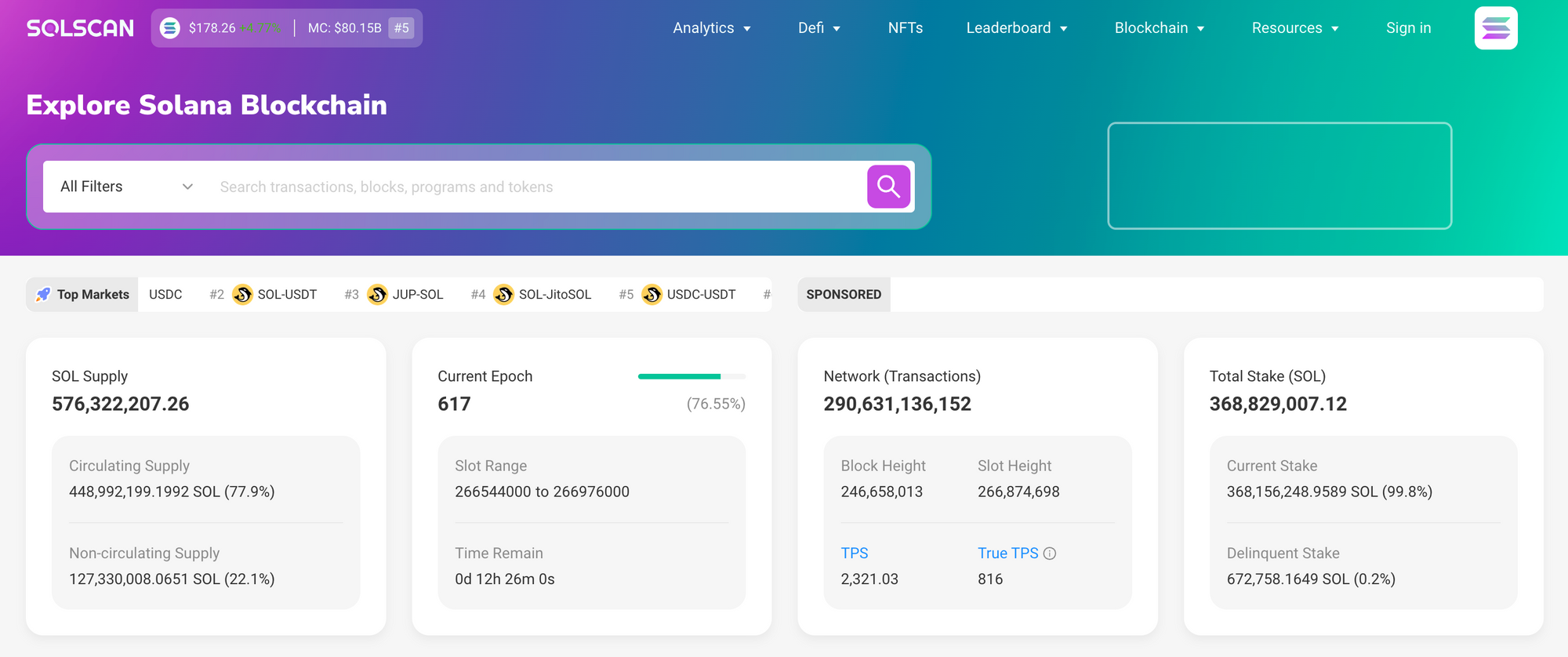
Explorers are the window into the chain. They show account changes, program instructions, fees, and confirmations. Use them to verify deposits, confirm mint authority on an NFT, or debug a failed transfer. Check one reliable source for Solana explorers here: https://sites.google.com/cryptowalletextensionus.com/solscan-explorer-official-site/ —it’s a practical starting point when you want a straightforward view.
Whoa! That link is handy. But don’t treat any single explorer as gospel. On one hand, explorers index data differently; on the other hand, the raw ledger is the same. Initially I thought discrepancies were bugs, but then I realized they’re often indexing choices—what to show by default, how to resolve token metadata, or how to display inner instructions within a transaction. So actually, wait—let me rephrase that: use multiple views when something looks odd.
Reading a transaction: start with the header. It tells you slot, block time, and signature. Then scan participants. Medium-length explanation: look for account keys and programs involved. Longer thought: dig into instruction logs and inner instructions, because many tokens and NFT mints happen inside program calls, not as top-level transfers, so the visible transfer line might not show the whole story unless you inspect inner instructions.
Step-by-step: Inspecting a SOL transfer
Find the signature. Paste it into the explorer. Short step. Look at the status. Succeeded? Failed? Pending? This tells you whether a retry or refund is appropriate. Next, check the fee. Fees on Solana are tiny, but they can spike during congestion, which matters for split-tx strategies.
Look for pre- and post-balances. Those show exactly how lamports moved across accounts. Then inspect instruction types—SystemProgram transfer, TokenProgram transfer, or a contract invoke. A TokenProgram transfer is how SPL tokens and many NFTs move. A SystemProgram transfer is plain SOL. Sometimes both appear in one transaction, which is where people get confused. On one hand, the UI simplifies; on the other hand, the ledger is explicit—so actually, don’t rely on UI summaries alone.
Pro tip: confirm the block time with your wallet’s timestamp. Wallets sometimes present local cache times; the on-chain timestamp is the canonical source. If a transaction shows “confirmed” but your app hasn’t updated, wait for finalization or re-query the RPC endpoint.
NFT tracking: more than just transfers
NFTs on Solana are mostly SPL tokens with metadata. But that metadata can point to off-chain JSON and images. That means an explorer that shows just token transfers isn’t telling the whole story. You need metadata resolution—creator array, update authority, royalties, and the mint’s history. Medium: a good explorer lets you trace the mint transaction, view the metadata account, and see creators’ addresses and share splits.
Who minted it? Who currently owns it? When was it last sold, and at what price? These are the questions collectors ask. Long thought: royalties on Solana are enforced at marketplace level, not strictly on-chain universally, so marketplaces agree to honor royalties; an explorer can show what royalties were set, but it can’t force a marketplace to pay them. That distinction trips people up, so keep it in mind.
Another practical point: some NFTs are wrapped, or use token wrappers and smart-contract-level custody. If you see an NFT moving but the owner address looks like a program, dig into inner instructions—there’s often an escrow or contract transfer happening. This is where tracing helps you separate custodial platforms from wallets.
Common pitfalls and how to avoid them
First: naming conventions. Accounts often have user-friendly labels in an explorer because someone attached them in the index. Labels are helpful, but they’re not proof of identity. Second: token metadata mutability. Some collections allow metadata updates; others lock it permanently. If metadata changes, the explorer will show the current state; it won’t necessarily keep a neat version history unless it explicitly archives snapshots.
Third: explorers may cache IPFS or Arweave links. If an image fails to load, the underlying NFT might still be fine. Don’t assume the art is gone—check the metadata URI and resolve it directly. Fourth: RPC inconsistencies. Different RPC nodes can lag; if you see a missing transaction on one explorer, try another or query the signature directly on-chain.
Hmm… something felt off about how some guides gloss over inner instructions. They act like transfers are always top-level. Not true. My first few months on Solana I chased phantom transfers until I learned to read the inner logs. That learning curve matters. Also, tiny tip: copy the signature to your wallet’s “view on explorer” button. Saves time.
When to use on-chain data versus marketplace APIs
On-chain data is the source of truth. Marketplace APIs are convenience layers. Use the chain to verify ownership and historical transfers. Use the marketplace to get activity context, like visible listings or bids. On one hand, marketplace data is richer in UX; on the other hand, it’s selective. So balance both depending on whether you need forensic certainty or a quick market snapshot.
I’m not 100% sure about every marketplace policy, but a safe workflow is: verify ownership on-chain, then check marketplace history for prices and listing context. If price history matters for valuation, use multiple sources and cross-check. Double-check royalties and creator accounts if provenance is central to your decision.
FAQ
How do I confirm a wallet received SOL?
Search the transaction signature in an explorer, and check the post-balance for the recipient account. If post-balance increased by the expected lamports minus any rent-exempt adjustments, the transfer landed. If the transaction failed, the signature will show an error and balances won’t reflect the transfer.
Can I see who minted an NFT?
Yes. Inspect the NFT’s mint transaction and the metadata account. The creator field and the mint instruction typically show who initiated the creation. Remember that the on-chain creator address is authoritative; display names or marketplace attributions are just extra context.
Why don’t explorers always show the same thing?
Explorers index and present data differently. Some display inner instructions by default; others hide them behind an “advanced” view. Indexing frequency, metadata fetching strategies, and label databases also vary. If data differs, cross-check the transaction signature and raw on-chain logs.